Unit of weight, Steel Applications
The unit for weight is one of the most fundamental concepts in science, engineering, trade, and daily life. It defines how the heaviness of an object is measured and standardized so that people across the world can understand and compare physical quantities.
Weight is not only a scientific concept but also a practical necessity in industries such as construction, manufacturing, transportation, and metal trading. Among all industries, the steel industry depends heavily on accurate weight measurement because steel is always traded in large quantities and its value is directly linked with weight.
This article provides a complete understanding of the units used for weight, its scientific meaning, industrial usage, standard measurement systems, and its practical importance in sectors such as steel and construction.

A weight unit is a standardized measurement used to express the force exerted by gravity on an object. In simple terms, it tells how heavy something is. Weight depends on mass and gravitational force. The more mass an object has, the greater its weight under gravity.
In physics, weight is defined as:
Weight = Mass × Gravity
The unit is: Newton (N)
However, in practical life and industries, weight is usually not expressed in Newtons. Instead, mass-based units are used for convenience.
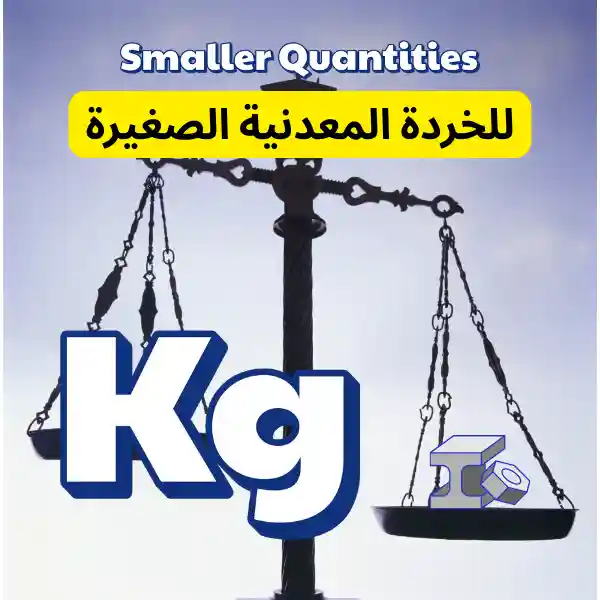
In the UAE, the metric system is used, and the unit for weight commonly in the METAL SCRAP INDUSTRY is the Ton, which is equal to 1000 kilos
Difference Between Weight and Mass units
Understanding the difference between weight and mass is essential for correctly interpreting units of weight.
Mass
Mass is the amount of matter present in an object. It is a scalar quantity and remains constant regardless of location.
- SI Unit: Kilogram (kg)
- Does not change with gravity
- Example: A steel rod has the same mass on Earth and Moon
Weight
Weight is the force exerted on mass due to gravity.
- Unit: Newton (N)
- Changes with gravity
- Example: A steel rod weighs less on the Moon than on Earth
Despite this scientific difference, industries commonly use mass units (kg, ton) as weight units for simplicity.
Unit of Weight
The International System of Units defines Newton as the unit for weight.
Newton (N)
One Newton is defined as the force required to accelerate a one-kilogram mass by one meter per second squared.
In formula form:
1 N = 1 kg × m/s²
Although Newton is scientifically correct, it is rarely used in commercial industries because it is not practical for large-scale trade.
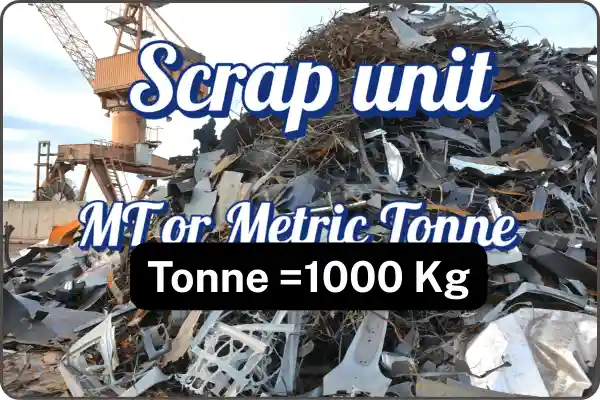
Weight units in Steel Industry
The steel industry is one of the largest users of weight measurement systems. Steel products are heavy, and therefore accurate weight measurement is critical for pricing, logistics, and engineering design. Common Units Used in Steel Industry are kg and ton.
Any assumption or misunderstanding regarding the unit may lead to pricing errors, financial loss, shipment disputes, and contractual complications. Therefore, all agreements, invoices, and shipping documents must clearly mention the exact unit being used.
Traders are strongly advised not to rely on verbal commitments and should always obtain written confirmation. This precaution helps maintain transparency, accuracy, and professionalism in cross-border business dealings and protects both parties from avoidable risks and misunderstandings.
Practical Units of Weight Used in Industry
In real-world applications, especially in engineering and trade, weight is expressed using simplified units.
Kilogram
The kilogram is the most commonly used unit of mass and is widely treated as a weight unit in practical applications.
- Basic SI unit of mass
- Used in small-scale measurement
- Common in households, workshops, and small industries
Gram
A smaller unit used for precise measurements. Used in laboratories and precision work
Metric Ton
The metric ton is the most important unit in heavy industries. Used in construction, steel, shipping, and scrap industries
Metric Ton as Industrial Unit for measurement of Weight
The metric ton (tonne) is the standard unit in industrial and commercial sectors.
It is widely used because:
- It simplifies large quantities
- Reduces calculation complexity
- Standardizes international trade
For example, steel is rarely measured in kilograms in bulk trade. Instead, it is measured in tons.
Types of Ton Units Around the World
Different countries use different definitions of “ton,” which makes understanding important in international trade. There are mostly three types like UK based, USA based and metric based tons, Understanding these differences is important in global industries like steel, shipping, and logistics.
Why Ton is Preferred in Steel Industry
Steel is always handled in bulk quantities. Using kilograms for large amounts becomes impractical. Therefore, reduces documentations complexity and makes pricing easire in contracts
Importance of Standard Units
Standardization of units is essential for global consistency. Without standard units, international trade would be inconsistent. Metric ton ensures uniformity in global markets.
Engineering and Construction
Accurate weight measurement ensures structural safety in buildings, bridges, and machinery.
Transportation
Weight determines shipping cost and load capacity.
Manufacturing
Raw material quantity is calculated based on weight units.
Historical Development of Weight Units
Weight measurement has evolved over thousands of years.
Ancient Systems
Early civilizations used body-based measurements such as stones, grains, and local units.
Imperial System
Developed in the UK, included pounds, stones, and tons.
Metric System
Introduced for global standardization, based on kilograms and meters.
Today, the metric system is the most widely used system in the world.
Why Kilogram and Ton Are Used Instead of Newton
Even though Newton is the SI unit, industries prefer kilogram and ton because:
- Easier to understand
- More practical for trade
- Suitable for large quantities
- Simplifies accounting and documentation
Newton is mainly used in scientific calculations, not commercial trade.
Role of Unit in Weight
Modern industries rely heavily on accurate weight measurement systems.
Digital Weighing Systems
Industrial scales now provide automatic conversion between kg and ton.
Automation
Weight data is integrated into software systems for inventory and billing.
Global Trade
Standard units ensure smooth international transactions.
Conclusion
The unit of weight is a fundamental concept that plays a vital role in science, engineering, and industry. While Newton is the official SI unit of weight, practical industries rely on kilogram and metric ton for convenience and standardization.
In sectors like steel, construction, and trade, the metric ton is the most widely used unit due to its simplicity in handling large quantities. Understanding units of weight is essential for accurate measurement, fair trade, and efficient engineering practices.
Standardized weight units ensure consistency across global industries and help maintain accuracy in every stage of production, trade, and construction.
Frequently asked question about weight unit
What is the unit of weight?
The Standard weight unit is Newton
What is the unit of mass?
The standard unit is Kilogram for mass.
How to calculate steel weight?
Steel weight is calculated using the formula: Weight = Volume × Density. For steel, density is 7850 kg/m³. For bars, a common formula is: Weight (kg) = (D² × L) ÷ 162, where D is diameter in mm and L is length in meters.